
 St
John the Evangelist Church School
St
John the Evangelist Church School 



Christian Distinctiveness
At St John's, we aim to provide a truly outstanding education for every child built upon a distinctly Christian ethos.
St John's also benefits from close links with the Diocese of Bath and Wells
Our Christian foundation is very much based on the Church of England’s Vision for education: Deeply Christian, Serving the Common Good.
Spirituality
At St. John the Evangelist Church School, we understand spirituality as an ongoing search for meaning, purpose and connection beyond the material aspects of life as we explore how we relate to:
- Ourselves (our inner values, personal growth, well-being and thankfulness)
- Others (belonging, compassion, empathy and respect)
- Nature and the universe (a sense of appreciation, wonder and interconnectedness)
- God and everything beyond that which we can see.
We believe that spirituality helps children and adults to develop and nurture a sense of calm and peace, supporting their well-being, resilience and self-awareness. Our spirituality allows us to ‘have life in all its fullness’ and live out our school values of Agapé, Faith, Fellowship, Forgiveness, Hope and Humility in order to be the best versions of ourselves and ‘Love, learn and soar together’.
We foster developing spirituality through planned moments of awe and wonder across the creative and academic curriculum. We encourage children to notice and show appreciation for the beauty in creation as they ask big questions and look for deeper meanings. During collective worship, there are shared, joyful moments of celebration for our own or other’s personal achievements and quiet opportunities for prayer and reflection.
Each class has a small Reflective area with a candle, pictures, prayer books, Bibles and artefacts. These spaces provide a place for children’s quiet contemplation and prayer as they consider their own values and beliefs, during the busy school day.
Collective Worship at St John's
“That they may have life, life in all its fullness.” (John 10:10)
The daily act of collective worship at St. John’s Church School is an uplifting experience which brings the whole school community together, in a safe space, to celebrate our love for God, our pride in our learning and each other so that we love, learn and soar together. Children and adults of all faiths and beliefs are welcomed and may choose to be active participants or observers.
Our Christian vision and values - Faith, Fellowship, Agapé, Hope, Forgiveness and Humility – are central to our inclusive, invitational and inspiring worship and the ethos of our school. Children and adults may choose to participate actively or observe and there is no compulsion to ‘do’ anything. Through worship, we aim to:
- Promote spiritual development and reflection.
- Respect and celebrate diversity, all faiths and beliefs.
We are fortunate to welcome Father Brendan and Rev. Kev, from our parish church of St. John the Evangelist, to our collective worship every week. Our worship is further enriched by contributions from pupils, staff, other local clergy from Churches Together in Clevedon (CTiC) and visitors from the wider community.
Our Worship structure.
Each act of worship follows the GERS model, a simple structure based around four key areas:
- Gather – We meet in the school hall where gentle music is playing to create a calm, reflective atmosphere. Children light three candles, for the Father, the Son – Jesus, the light of the world – and the Holy Spirit. Worship begins with our candle prayer and Christian call and response greetings.
- Engage – We explore A theme through Bible stories, music, discussion, drama, or real-life examples that connect faith and values to our everyday lives.
- Respond – A prayer, quiet reflection, or creative expression, respecting individual beliefs.
- Send – A closing thought or blessing, encouraging us to carry the message into our day.
We use the Windows, Mirrors, Doors model to help children reflect:
- Windows – Looking out at the world with curiosity and wonder.
- Mirrors – Looking in on our own thoughts and feelings.
- Doors – Considering how we can act and make a difference.
- Candle – Reminding us of the Christ-light, that God is with us and helping us make connections with the Bible and our Christian vision.
Music and Creativity
Music plays a key role in worship, helping to create a calm and reflective atmosphere as children gather. We draw from both modern worship songs and the rich heritage of traditional hymns, using music to inspire joy and deepen spiritual engagement. Worship Praise on Wednesdays is an opportunity for celebration and spiritual reflection through music and song and, in celebration of their creative talents, children sometimes play instruments as the school gathers or leaves worship.
Our weekly pattern of worship:
- Monday – Whole School Worship led by our parish clergy or the Headteacher.
- Tuesday – Key Stage or Class Worship using Picture News.
- Wednesday – Whole School Worship Praise.
- Thursday – Whole School Worship led by SLT.
- Friday – Celebration Worship, sharing one another’s achievements and values.
All classes lead at least one Worship each year, usually on a Friday. In these instances, Celebration worship moves to a Thursday.
Partnership with St. John the Evangelist Church.
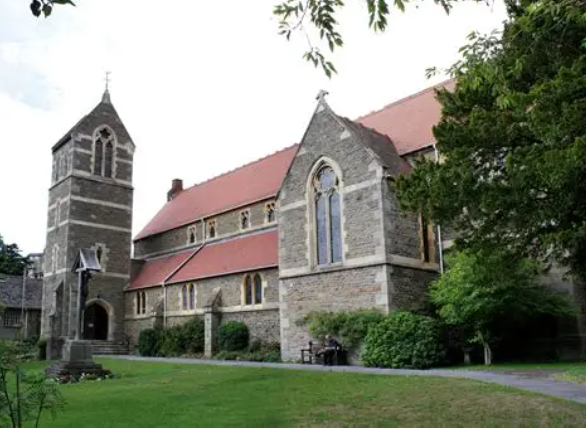
Welcome | St John the Evangelist, Clevedon
Our strong partnership with St. John’s Church strengthens our sense of community. We hold special services at the church to mark significant moments in the Christian calendar, such as Harvest, Christmas with a candlelit carol service, Easter and our Leavers’ Service.
Every year group in our school is extremely fortunate to be able to participate in workshops organised by our church family. These workshops have focused on a variety of themes including Mothering Sunday, Lent, the Annunciation, Ascension Day, Pentecost, Remembrance and Christmas. Each one involves a Bible story, a craft activity and a short act of worship for families, led by the pupils, as they reflect on their learning and experiences in this holy space.
Why Is Collective Worship Important?
Collective Worship:
- Deepens understanding of the Christian story and traditions.
- Encourages reflection on life’s joys and challenges.
- Builds a sense of belonging and community.
Pupil Leadership
Children play an active role in worship. They help to plan, lead and evaluate, light the candles, welcome visitors, lead prayers and contribute ideas through our Ethos and Prayer teams to ensure that worship is meaningful and relevant.
Inclusivity and Legal Requirements
While worship is rooted in Christian tradition, it is open and respectful of all. Parents have the legal right to withdraw their child, and staff may also withdraw from leading or participating. Such requests are dealt with sensitively, in line with the Education Reform Act (1988).
BWMAT Collective Worship Policy
Collective Worship at St John's
Religious Education
At St John's school, we aim to provide an inclusive progressive education in RE. We follow a whole school overview that is planned from the AMV and Understanding Christianity frameworks. Children in nursery through to year 6 will build upon their learning and understanding year on year. This learning is linked closely to the British values reflecting that all children are unique and learn in different ways. The children are better equipped to understand the views of others. This understanding will lead to respect and tolerance of those who have a different point of view. This will be part of their lifelong journey as local, national, and global citizens. It will also provide children with the skills needed to in their future and help them as long-life learners beyond St John's.
RE is a necessary part of a ‘broad and balanced curriculum’ and must be provided for all registered pupils in state-funded schools in England. It is compulsory for all pupils in academies. RE is multi-faith and recognises the place of Christianity and the other principal religions in the UK. Non-religious worldviews are included.
This requirement does not apply to pupils below compulsory school age (although there are many examples of good practice of RE in nursery classes).
Parents have the right to withdraw their child(ren) from RE or part of RE and can do so without giving any explanation. Parents can only withdraw their child(ren) from RE, not other curriculum areas. For example, pupils can’t be withdrawn from a study of religious art in an art lesson, or parts of the history curriculum such as the study of Christian conversions.